Full-scale soil stabilization
DARPA invested $3.8 million to advance biomineralization for soil and sand stabilization. The program culminated in a full-scale demonstration at Camp Lejeune.

Department of War programs
BioSqueeze is advancing biomineralization as a deployable method for strengthening native materials, repairing critical infrastructure and reducing logistics in contested and remote environments.
The operational problem
Military construction often depends on stable ground in locations where soil quality, access and logistics are unfavorable. Traditional stabilization can require large quantities of imported cement, heavy mixing equipment and extended cure schedules.
Biomineralization offers a different deployment model: use low-viscosity fluids, native material and local water to create strength in place.
Darpa success story
DARPA program manager Matthew Pava explains how BioSqueeze translated biomineralization into biocement capable of rapidly creating durable infrastructure in difficult-to-reach locations.
View the DARPA success story →Operational applications
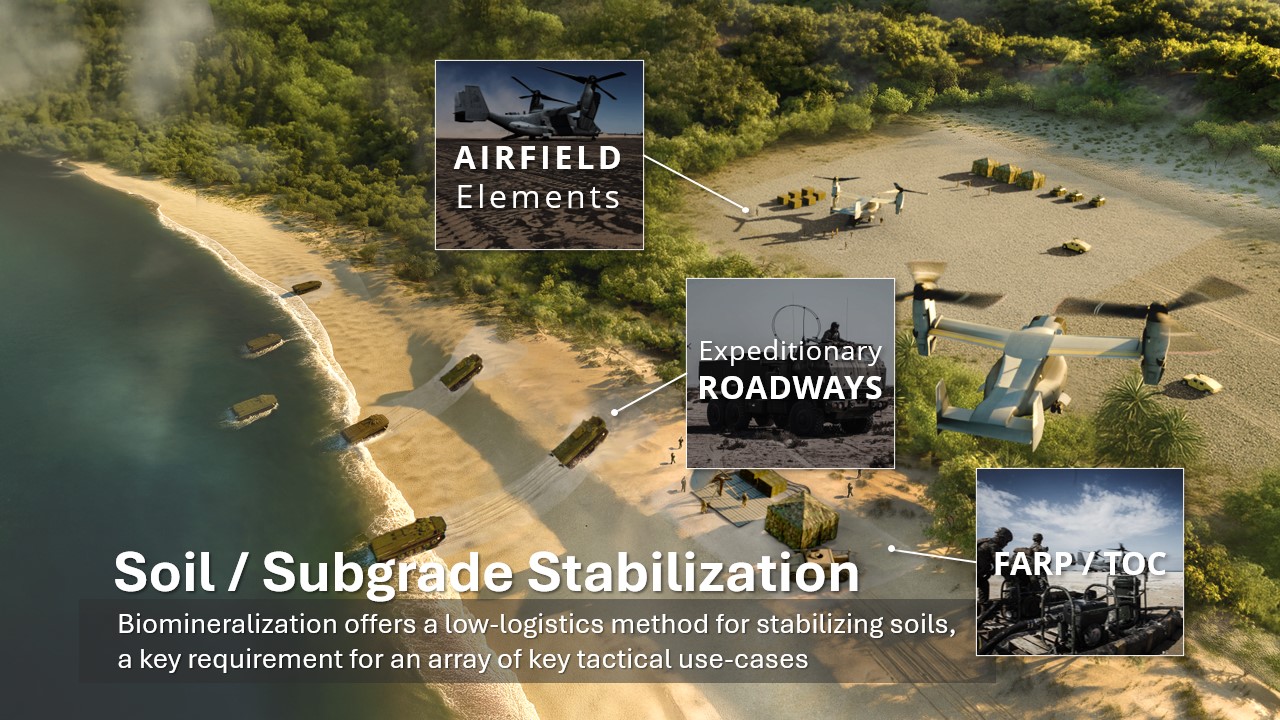
The same mineral-forming process can be designed around the substrate, access geometry and performance requirement of each mission.
Camp Lejeune · April 2025
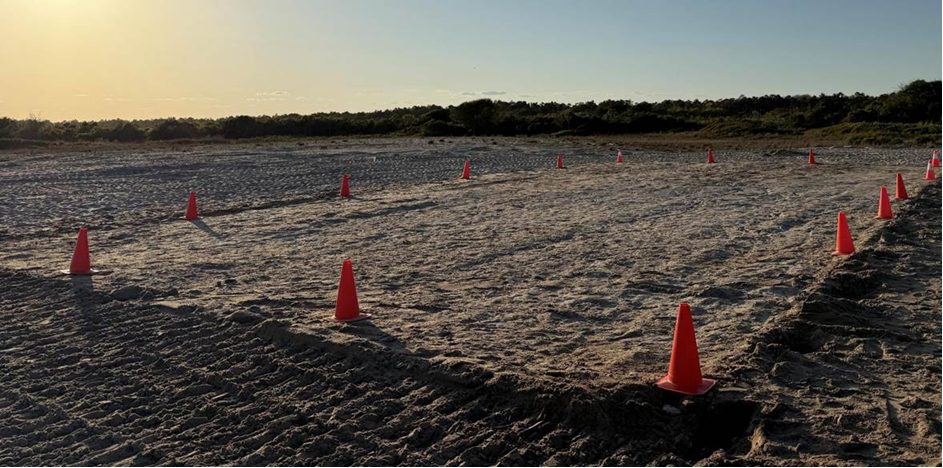
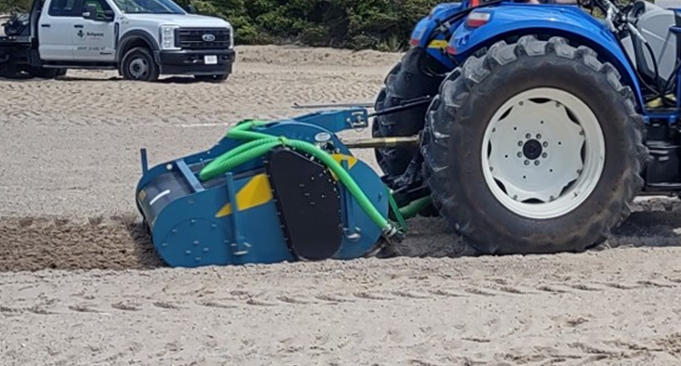
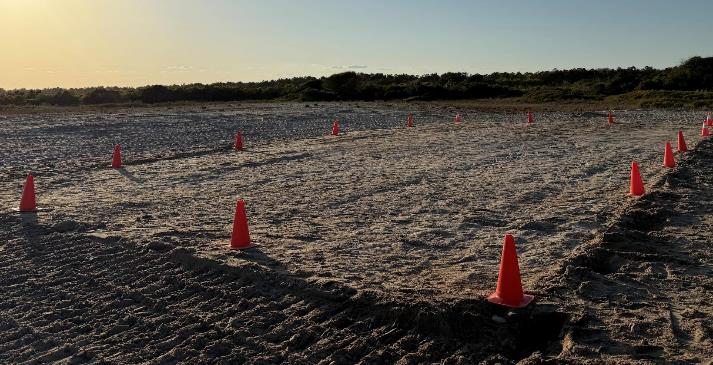
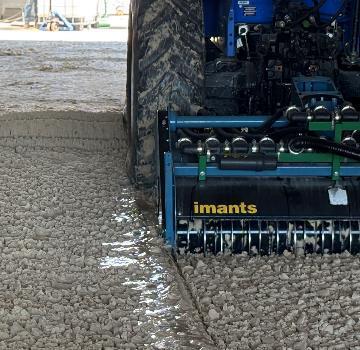
Under DARPA's SBIR XL program, BioSqueeze treated a 70-by-35-foot area of native beach sand to a depth exceeding 17 inches. The treatment converted loose, saturated sand into a consolidated operating surface.
The treated area withstood more than 800 passes by multiple military vehicle types with minimal rutting. The U.S. Army Corps of Engineers' Engineer Research and Development Center independently evaluated the demonstration and reported that the technology exceeded expectations.
Field evidence
The mission visuals describe where the platform is headed. The images show the treatment equipment, delivery pattern and treated ground from actual development work.
Program progression
The Camp Lejeune work validated the core strengthening mechanism at field scale. Subsequent Air Force programs are extending that capability into specific airfield construction and repair missions.
DARPA invested $3.8 million to advance biomineralization for soil and sand stabilization. The program culminated in a full-scale demonstration at Camp Lejeune.
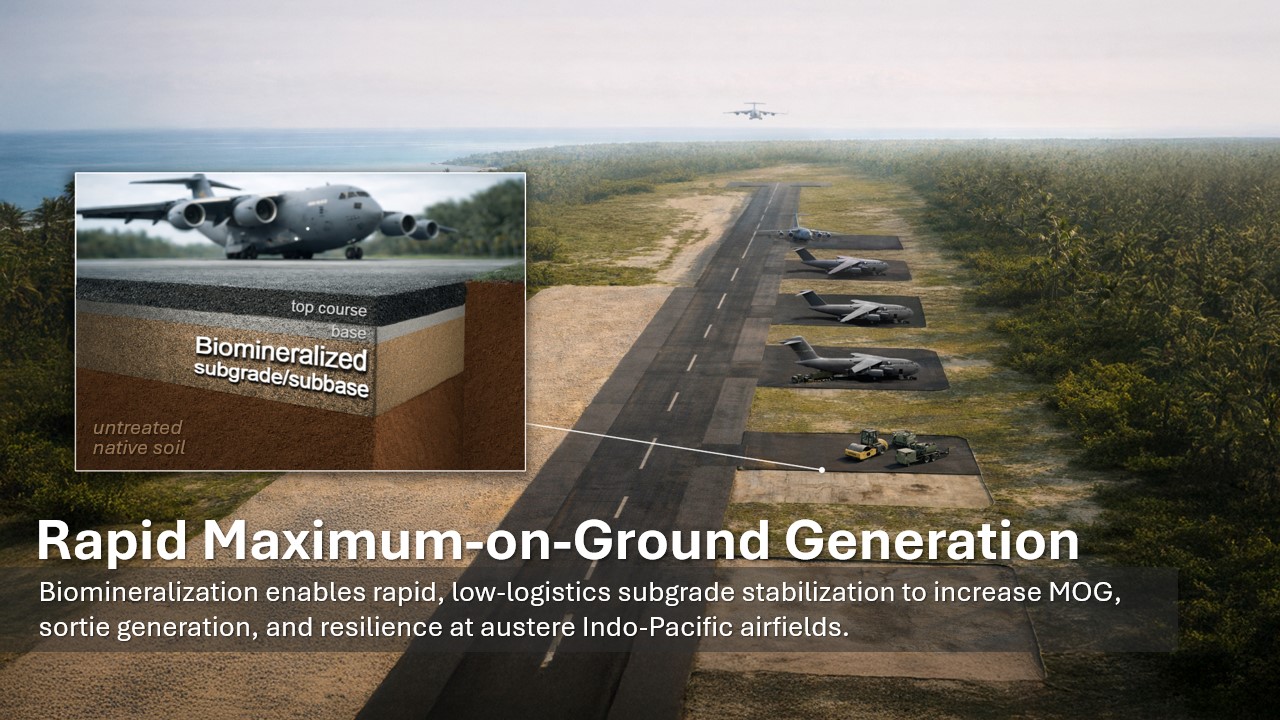
A completed development program applied biomineralization and local materials to rapid repair of damaged airfield surfaces.
An active program is developing in-situ strengthening beneath existing airfield pavement to reduce removal, replacement and logistics.
Selected in July 2026 to bridge successful prototype development toward operational scaling and procurement transition.
BioSqueeze partnered with the Air Force Research Laboratory under the BioMADE program to demonstrate scalable biomanufacturing for construction materials.
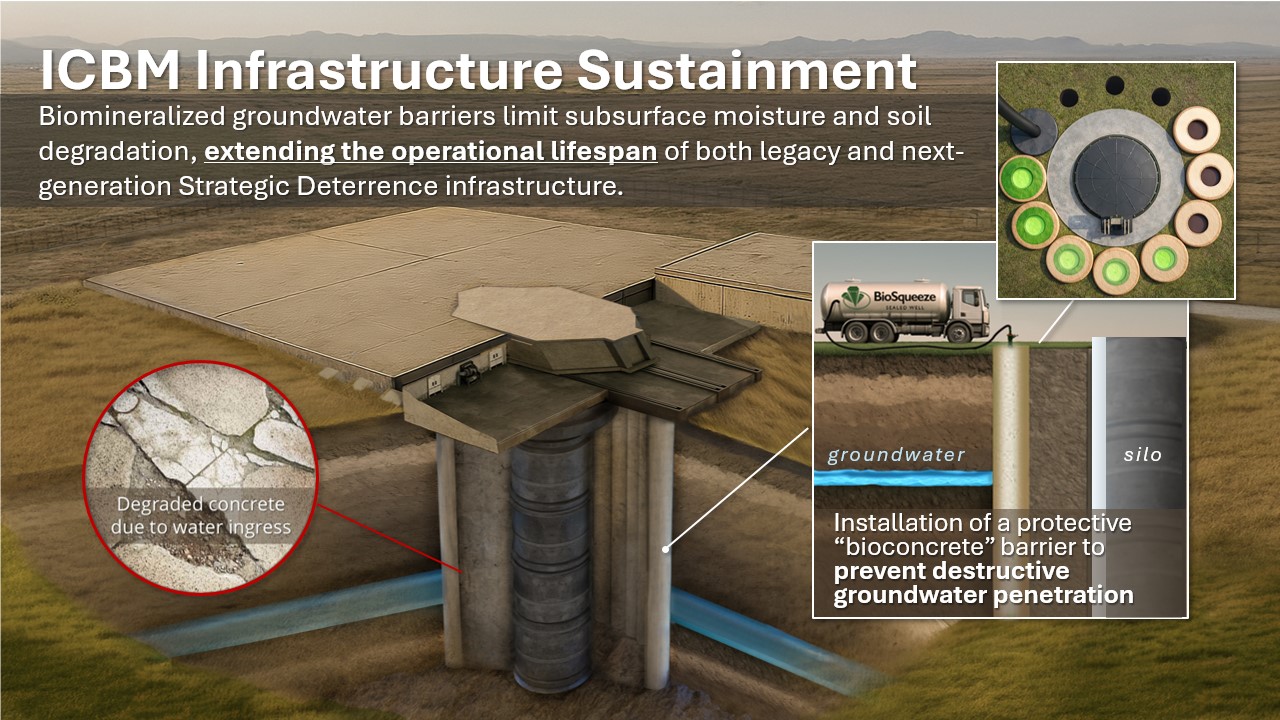
BioSqueeze is developing an in-situ biomineralization capability that creates durable subsurface groundwater barriers around ICBM infrastructure to reduce water intrusion, improve facility resilience and lower long-term sustainment costs in support of the Air Force's nuclear deterrence mission.
Defense & dual-use applications
Airfields, landing zones, temporary roads and operating surfaces constructed with native soil and local water.
In-situ strengthening of inadequate subgrade beneath pavement without full removal and replacement.
Crater repair and restoration of damaged operating surfaces using deployable equipment and local materials.
Binding unconsolidated surface fines to control dust, rutting and erosion in austere environments.
Healing fractures and reinforcing degraded concrete, cement and subsurface assets.
Mineral caps, groundwater barriers and permeability control for contaminated or sensitive sites.
One mechanism, different substrate
The mineral-formation mechanism is consistent. What changes across missions is the substrate, delivery geometry, treatment volume and required performance. That is what makes biomineralization a platform rather than a single-purpose product.
See how the platform works →