
Energy application
CO₂ Containment
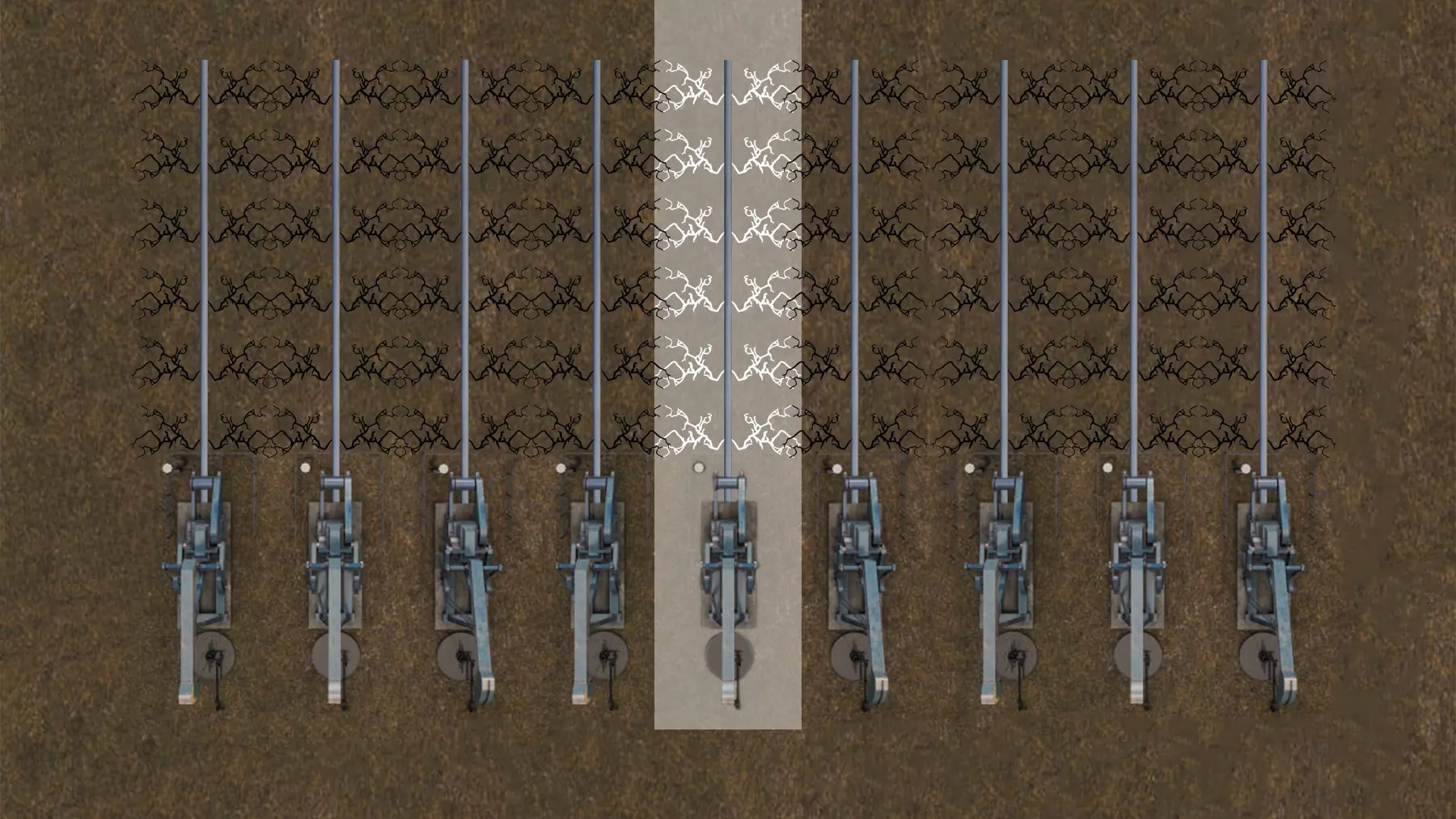
Form deep mineral barriers across connected fractures and high-permeability leakoff pathways.
Application focus
Keep injected CO₂ in the intended reservoir volume.
Cyclic gas, WAG and CO₂ injection programs can lose injected volume through connected fractures and high-permeability pathways into offsets or unproductive rock. Workarounds that reduce pressure or shut in offset wells can limit recovery and add operating complexity.
BioSqueeze fluids enter the connected leakoff network and form impermeable limestone barriers within it. Treatment progress is reflected in the injection response, providing a field signal for tuning the permeability reduction to the operating objective.
Discuss this applicationWhere it fits
Designed around the connected pathway.
Every program begins with the treatment objective, available diagnostics, access geometry, injectivity and the performance signal that will define success.
- CO₂ flood containment
- Cyclic gas and huff-and-puff
- Offset-well communication
- Fracture-network leakoff
Related articles
The CCS Industry’s Biggest Blind Spot Is Already in the Ground
Carbon-storage performance depends not only on the target formation, but on the integrity of existing wells that intersect the containment system.
Read article →A New Class of Well: Integrity Restoration for CO2-EOR and CCS Wells
For operators running mature CO2-EOR floods or planning carbon storage projects, wellbore integrity is no longer a secondary issue. It is a reservoir management issue, an operating cost issue, and increasingly,…
Read article →CO2 Enhanced Oil Recovery: Challenges, Integrity, and the Role of Biomineralization
Global growth in energy demand and production declines in aging oil fields have driven operators toward enhanced oil recovery (EOR) techniques that can unlock the substantial hydrocarbons still trapped after…
Read article →