
Energy & Oil and Gas
The commercial foundation
of the BioSqueeze platform.
More than 450 field deployments across the United States and Canada have established biomineralization as a practical tool for difficult well-integrity and subsurface flow-control problems.
Explore energy applicationsField-proven engineering
Seal pathways conventional materials cannot reach.
Portland cement, resins and mechanical systems solve many well-integrity problems. They become less reliable when the defect is too small, the geometry is unknown, the pathway is connected over long distances or placement pressures threaten to create additional damage.
BioSqueeze fluids move at approximately the viscosity of water, self-divert through active pathways and form gas-tight limestone barriers in place.
Energy applications
Six ways to engineer flow, integrity and recovery.
Each application uses the same mineral-forming platform, tailored to the pathway, substrate, operating conditions and performance objective.
Well Integrity
Restore pressure containment across casing defects, micro-annuli and connected leakage pathways.
Explore application →02Water Shutoff
Use active water pathways to carry treatment deep into the channels that are hurting production.
Explore application →03Fines Migration / Sand Control
Bind loose grains at their source while maintaining connected pore space for production.
Explore application →04Flood Conformance
Reduce permeability in dominant flow paths and redirect injected fluids into unswept intervals.
Explore application →05CO₂ Containment
Form deep mineral barriers across connected fractures and high-permeability leakoff pathways.
Explore application →06Refrac
Seal depleted fracture networks so restimulation energy can create new reservoir contact.
Explore application →Engineered for the defect scale
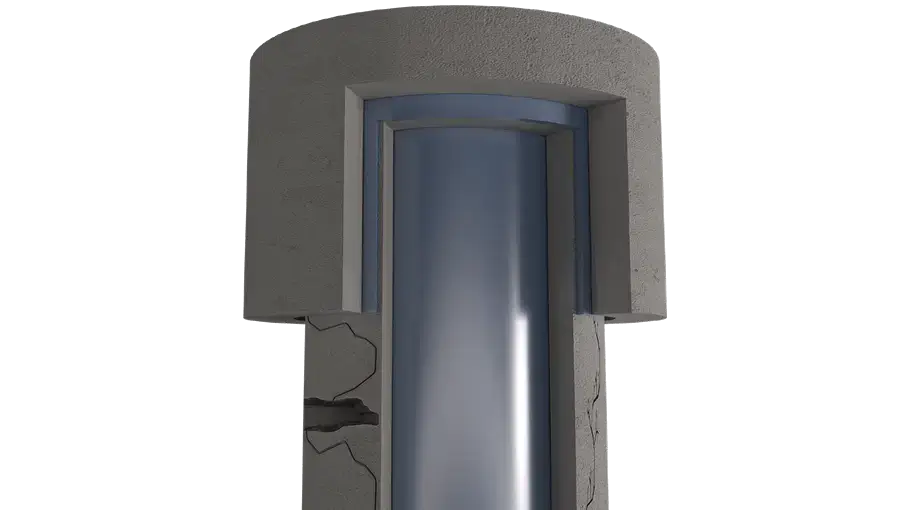
MicroSeal™
1 μm–1 mm
For micro-annuli, pinholes and narrow casing-cement channels where low-viscosity placement is essential.
Proven field results
Problems resolved in operating conditions.
Appalachian Storage Well Abandonment
Two annuli sealed, sustained casing pressure eliminated and the well approved for P&A.
View case →DeWitt County, TexasEagle Ford Abandonment
Treatment of a previously plugged well leaking gas to surface.
View case →Alberta, CanadaSerious Alberta Vent Flow
Field remediation of a high-consequence surface casing vent-flow problem.
View case →San Juan BasinSan Juan Disposal Well
Mechanical-integrity remediation in an operating disposal-well environment.
View case →Loving County, TexasPermian P&A
Gas and fluid flow eliminated after conventional cement-squeeze attempts could not establish injection.
View case →Marcellus Shale · Schuylkill County, PAMarcellus Casing Leak
Two leaking zones sealed and mechanical integrity restored after a casing patch and resin repair were unsuccessful.
View case →Field deploymentRigless P&A
Rigless biomineralization treatment for annular pathways that remain after conventional plugging.
View case →Discuss a well