
Energy application

Well Integrity

Restore pressure containment across casing defects, micro-annuli and connected leakage pathways.

← All energy applications
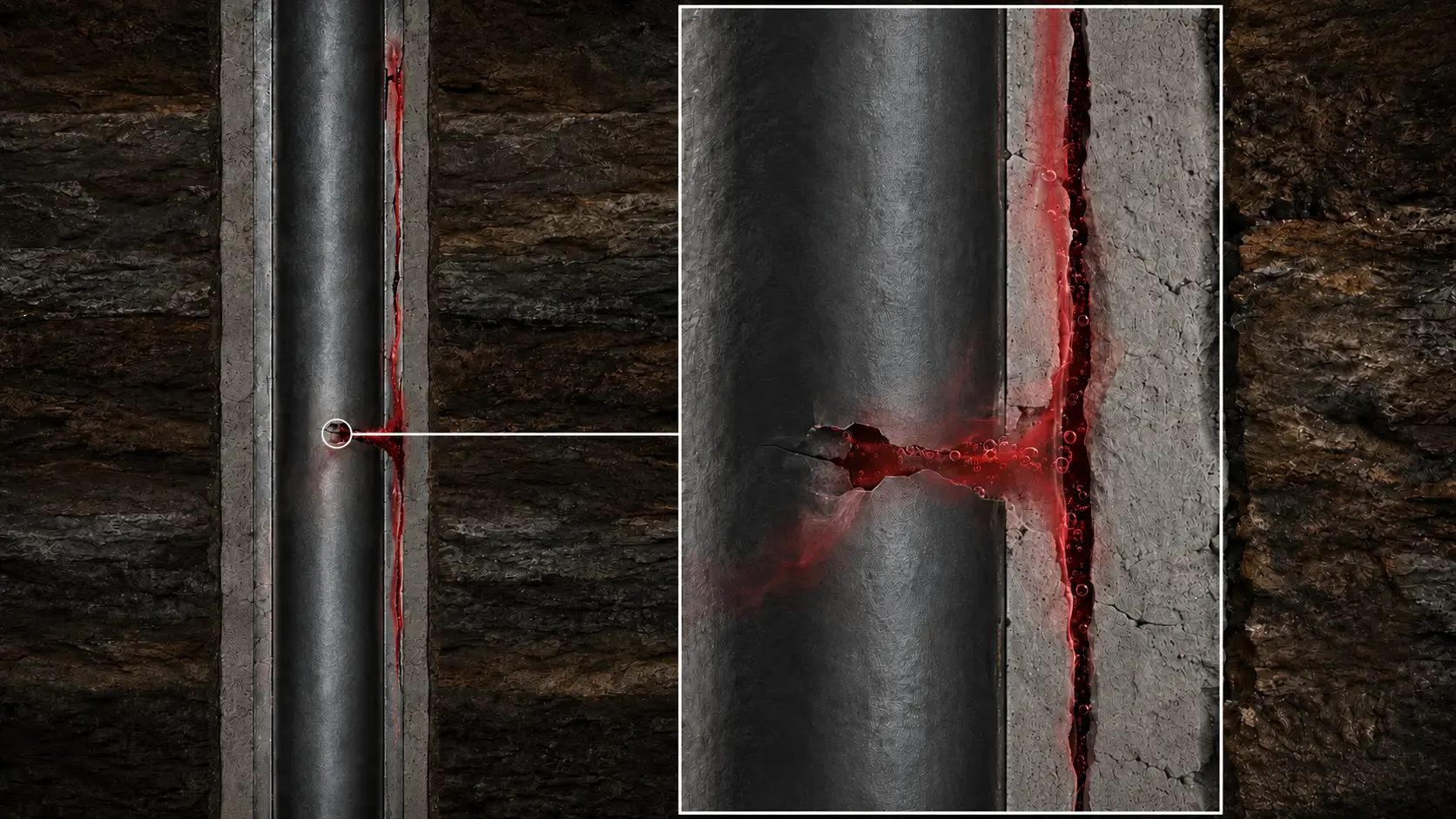
Full-drift wellbore cutaway with a bordered close-up showing a casing leak connected to an upward microannular pathway between steel and cement

Application focus

Restore integrity without reducing wellbore access.

BioSqueeze targets casing defects, micro-annuli, debonded cement, corrosion pits and connected gas or fluid pathways with water-like biogenic fluids. The treatment enters defects that conventional cement or resin may not reach, then forms crystalline calcium carbonate in place.

The mineral seal grows at the molecular scale and is designed to preserve the original wellbore ID—without installing a patch or liner and without leaving material that requires drillout.

Discuss this application

Why BioSqueeze for well integrity

The advantage is placement—not simply material strength.

Conventional fill and mechanical systems can be effective when the annulus is open and cement is absent. When cement is already present, BioSqueeze is designed to move through its connected defects, form mineral inside the pathway and preserve full wellbore access.

01

Water-like delivery reaches small and remote pathways

02

Active leakage paths help carry treatment to the defect

03

Mineral forms in place against steel, cement and rock

04

Original wellbore ID is preserved without a liner or drillout

Portland cement

Where it works well

Open annular volume, bulk voids and accessible intervals where little or no cement is present and a cement slurry can be placed with reliable isolation.

Placement limitation

When cement is already in the annulus, slurry particles and rheology limit entry into its micro-annuli, fine channels and corrosion pathways. Cement can also become gas-cut or shrink while setting, leaving connected leakage paths behind.

BioSqueeze difference

Water-like fluids move through defects within and behind existing cement, then grow crystalline calcium carbonate inside the active pathway instead of trying to displace it with another bulk slurry.

Resins

Where it works well

Discrete, accessible leaks or open annular volume with little or no cement, where placement and cure conditions can be tightly controlled.

Placement limitation

Resin viscosity and cure behavior can restrict penetration through cemented annuli. Resins contract while bonding and curing, which can leave or create micro-channels at the steel or cement interface.

BioSqueeze difference

Sequential, water-like stages penetrate connected defects in existing cement and form a non-shrinking limestone seal directly against steel, cement and rock.

Casing expansion

Where it works well

A temporary response to annular gas migration where deforming the casing may compress adjacent cement and make a pathway more tortuous.

Placement limitation

Expansion does not remove or fill the pathway and may only delay renewed migration. The force can damage pipe, cement and nearby hardware such as collars while leaving distributed defects beyond the expanded interval untreated.

BioSqueeze difference

BioSqueeze follows the connected pathway and forms mineral within it, eliminating conductivity without mechanically deforming casing, cement or completion hardware.

Patches & liners

Where it works well

Known, localized mechanical casing damage where internal hardware can span the defect and reduced wellbore ID is acceptable.

Placement limitation

Patches and liners permanently restrict the wellbore, limiting pump rates, tool access and future completion or intervention options. They isolate the interval but do not repair defects within an existing cement barrier.

BioSqueeze difference

BioSqueeze treats the discrete leak and connected cement pathway while preserving the original full-drift ID—without installing hardware that may complicate future operations.

Where it fits

Designed around the connected pathway.

Every program begins with the treatment objective, available diagnostics, access geometry, injectivity and the performance signal that will define success.

  • Sustained casing pressure and vent flow
  • Casing leaks and corrosion defects
  • Mechanical-integrity test failures
  • Disposal and storage well integrity

Evaluate a candidate

Discuss well integrity with the BioSqueeze team.